Pika H3 Flex Is Out: Features, Pricing and Access

The short answer
Pika released Pika H3 Flex on October 29, 2026, a post-trained version of MiniMax H3 that generates in 6 steps instead of 50 and ships with open weights. It takes up to 12 references, exports five audio stems and finishes at up to 4K through Pika's hosted API. It is live on the Pika API, with the pika.art app following on November 2, according to a third-party report.
On this page (12 sections)
What is Pika H3 Flex?
Pika H3 Flex is a video generation model from Pika Labs, built by post-training MiniMax H3. Pika announced it on October 29, 2026 as a model "built for professional iteration," with open weights, up to 12 references, separate audio stems and output up to 4K.
Flex is not trained from scratch. According to Pika's announcement, the team post-trained MiniMax H3 to generate in six steps instead of 50, then refined the faster model for quality and creative control. The Hugging Face card tags it as an adapter on MiniMaxAI/MiniMax-H3.
Pika frames the model around fast iteration: in its words, the first generation is a starting point, and the creative work is what happens next.
Pika H3 Flex release date and availability
Pika H3 Flex was announced on October 29, 2026 and is live on the Pika API. According to Screenweaver, it reaches the pika.art creation app on November 2. The weights are on Hugging Face and GitHub.
Screenweaver says the announcement also went out as a Business Wire press release. Pika's own account posted on November 4 that the model debuted as the #1 open-weight model on DesignArena's text-to-video board.
Outside developers have already built on it. In the same post, Pika says @_akhaliq built a Turbo LoRA less than 24 hours after launch, with 2-step draft generation plus 4-step fast and 8-step HD variants, compatible with ComfyUI and Diffusers. That is Pika's description of a third-party release, and we have not seen the release itself.
Pika H3 Flex key features and specs
Flex supports text to video, first and last frame, reference to video and reference-guided editing. Clips run 5 to 15 seconds at 24 fps, with native 480p or 768p output and hosted upscaling to 1080p, 2K or 4K. Specs below come from Pika's page as read by Screenweaver on November 1.
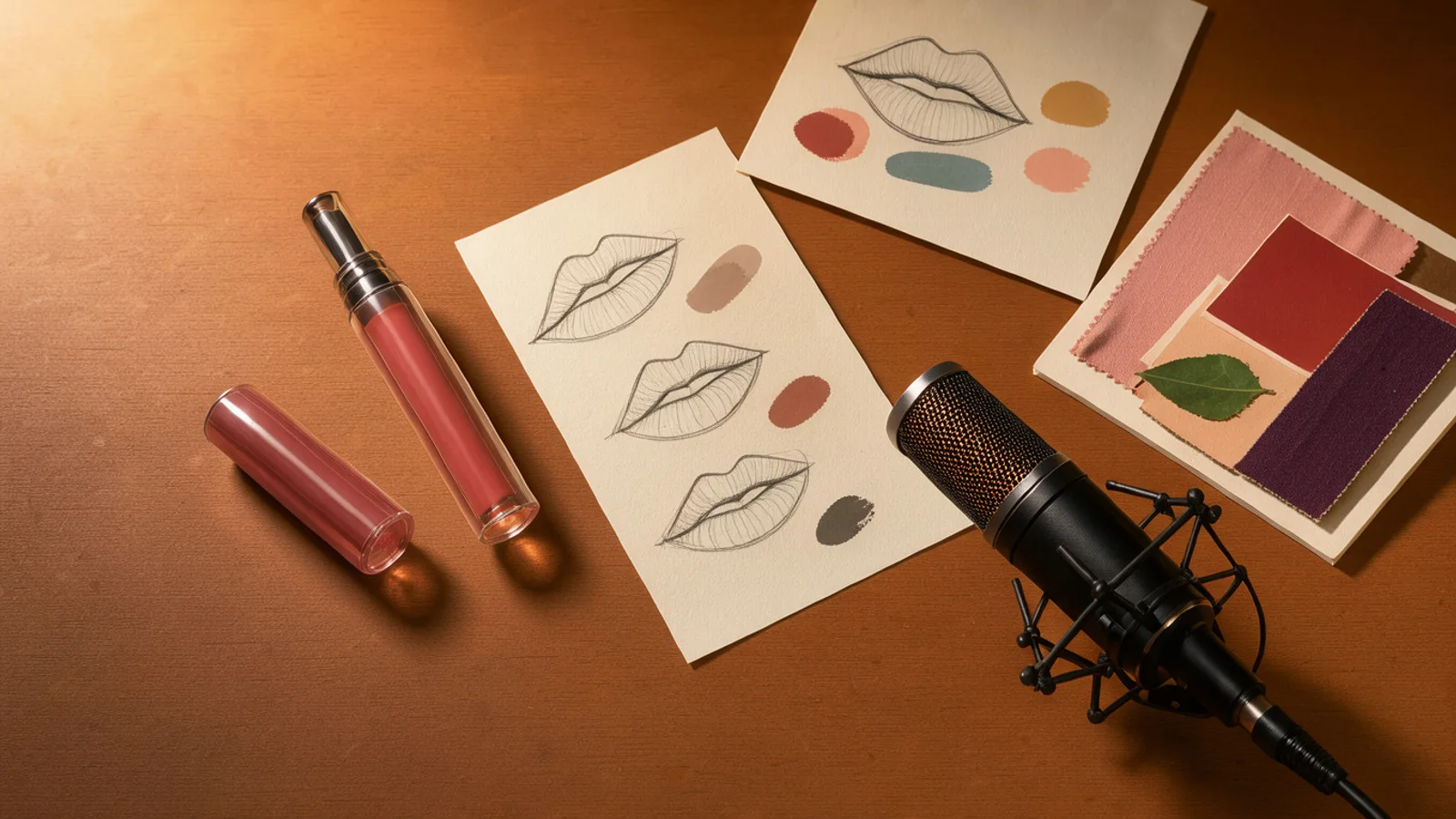 Reference items for a product film laid out on a studio table
| Spec | Pika H3 Flex |
|---|---|
| Modes | Text to video, first and last frame, reference to video, reference-guided editing |
| Clip length | 5 to 15 seconds, whole seconds |
| Frame rate | 24 fps |
| Native resolution | 480p or 768p |
| Hosted upscale | 1080p, 2K or 4K in the same job |
| References | Up to 12: 9 images, 3 videos, 3 audio clips |
| Audio | Stereo at 32 kHz, optional stems (dialogue, score, SFX, foley, ambience) |
| Aspect ratios | 11, from 21:9 to 9:21 |
| Prompt length | Up to 8,000 characters |
| Seed control | Yes |
Some rules matter in practice. At least one image or video reference is required, so audio-only requests are refused. Video and audio references each run 2 to 15 seconds. The per-type caps add up to more than 12, so you trade slots between types.
The open release is narrower than the hosted one. Per the Hugging Face card, local inference covers native 480p and 768p with mixed stereo audio, while 1080p to 4K, audio stems and prompt enhancement are Pika API extensions.
Pika H3 Flex speed claims and benchmark ranking
Pika says Flex can generate a 15-second 768p clip with synchronized audio in as little as 7 seconds of transformer computation. That is a controlled benchmark of transformer time, not the wait you will see on an API call, and Pika's page says so.
Pika also claims Flex is up to 1.8 times faster and up to 80% cheaper than H3 Max, averaged across text, image and reference jobs.
On quality, Pika says Flex ranks #1 among open-weights models and #7 overall on DesignArena's text-to-video leaderboard. Screenweaver reports a score of 1293, above base H3, H3 Max and Seedance 2.5 according to Pika. That is one crowd-voted board. Run your own product shots before moving a campaign over.
Pika H3 Flex pricing and free access
Pika has confirmed relative savings (up to 80% cheaper than H3 Max) and, per Screenweaver, $0.001 per second for audio stems. A full per-second video price was not available to us. A Reddit post claims about $0.01 per second, roughly $0.10 for 10 seconds, but that is not confirmed by Pika.
The weights are published on Hugging Face and GitHub. In the app, Pika's pricing page lists these plans:
| Plan | Price | Credits | Commercial license |
|---|---|---|---|
| Free | $0 | Credit packs only | No |
| Starter | $10/mo | 900 per month | Yes |
| Creator | $35/mo | 3,150 per month | Yes |
| Fancy | $95/mo and up | 8,550 per month | Yes |
Credit cost per Flex generation is not published in the pages we reviewed. Pika's pricing page shows all models are included on every plan.
How to use Pika H3 Flex for AI video and static ads
Flex fits ad teams that iterate on one product across many angles. Pika's own example turns a single product reference into a multi-shot lip-gloss commercial, with the reference guiding the product's look while setting, camera and style change.
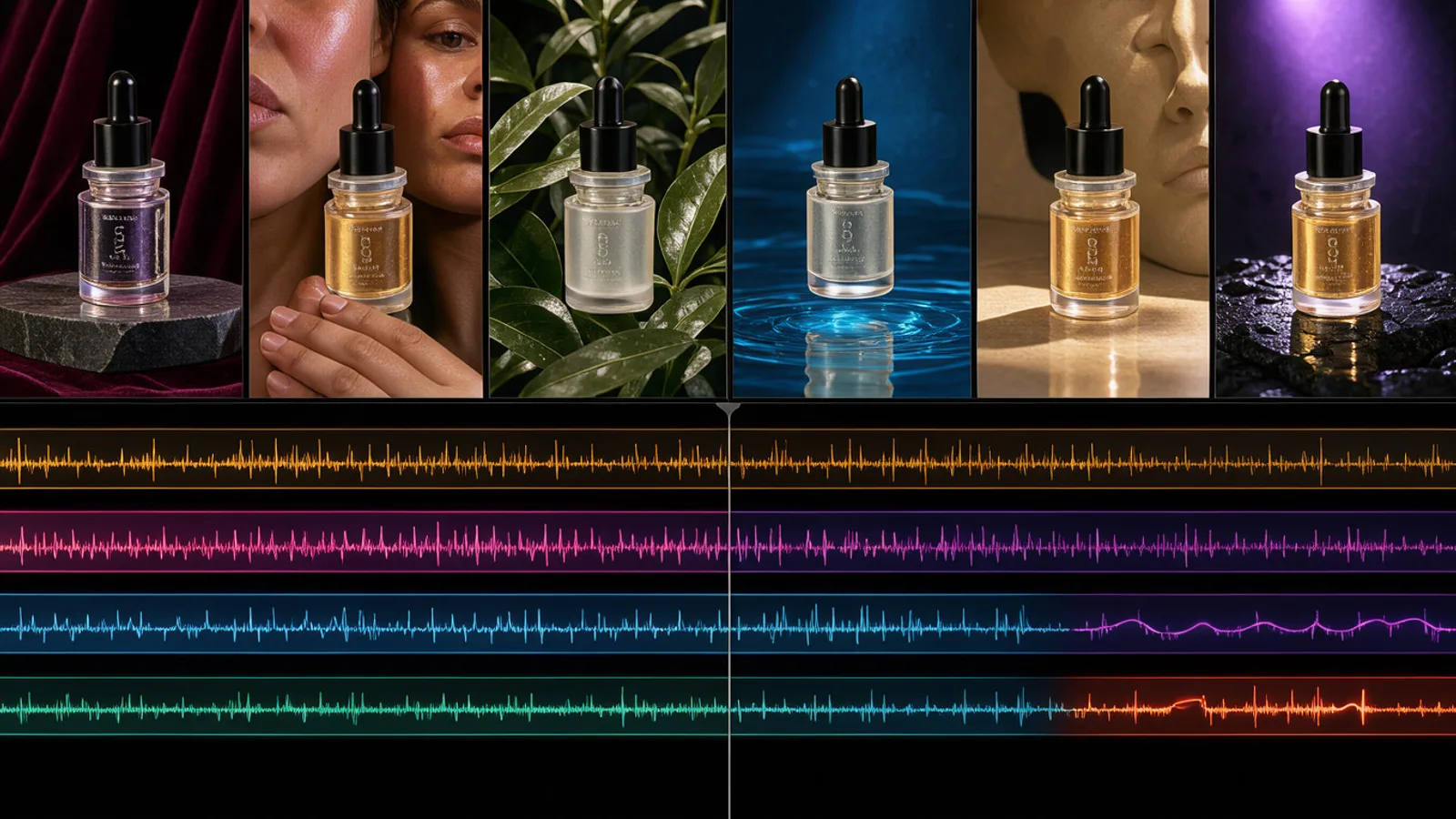 Product video variations lined up on an editing timeline above separate audio tracks
Where it could slot into a workflow:
- Hook variants: a 5 to 15 second clip with fast generation lets you test several openings per concept. See our hook rate and hold rate benchmarks for what to measure.
- Product b-roll: feed up to 9 product photos and a motion video reference, then change setting and camera.
- Localization and edits: with dialogue on its own stem, you can mute a generated line and lay a recorded or translated one under the same picture.
- Format coverage: 11 aspect ratios from 21:9 to 9:21 cover vertical and widescreen placements.
Screenweaver notes Pika does not publish a test of how well a voice sample holds across separate generations, so check that before building a spokesperson series on it. For comparing Flex with other models side by side, the AdGraam Playground is one place to do it, and Flow Builder can chain generation and upscale steps. For broader context on AI UGC, see our guide to AI UGC ads.
Pika H3 Flex vs other AI video models
Flex is closest to its parent, MiniMax H3, and Pika says it beats H3, H3 Max and Seedance 2.5 on one DesignArena board. The clearest practical difference is the reference budget: 9 images against the 30 Screenweaver says Seedance 2.5 accepts.
| Model | Max references | Native resolution | Audio | Weights |
|---|---|---|---|---|
| Pika H3 Flex | 12 (9 images, 3 videos, 3 audio) | 480p / 768p, upscale to 4K | Stereo, up to 5 stems via API | Open |
| MiniMax H3 | 9 images, 3 videos (per Screenweaver) | Not announced | Not announced | Not announced |
| Seedance 2.5 | 30 images (per Screenweaver) | Not announced | Not announced | Not announced |
Related open work is also appearing on the same base: see P-H3-Image from Pruna.
What to watch next
Watch for three things: a published per-second API price, credit costs inside the pika.art app, and the open-weight license terms for commercial use. Until those are out, you cannot work out what Flex costs at ad volume.
Also watch the community adapters. Pika highlights a Turbo LoRA that could make drafts faster still, but its quality is unverified. Side-by-side tests on product shots, and on whether a voice stays the same across separate clips, are still missing.
What people are posting
This is literally why we released the Pika H3 Flex weights. Less than 24 hours after we launched, @_akhaliq built a Turbo LoRA with 2-step draft generation. His release includes 4-step fast and 8-step HD variants, compatible with ComfyUI and Diffusers—and now lives under
Pika released the most affordable video model Pika Labs has released Pika H3 Flex, a post-trained version of MiniMax H3 optimized for faster and cheaper AI video generation. Here are the interesting parts: 1. Video Quality According to DesignArena's leaderboard: Pika H3 Flex MiniMax H3 Max MiniMax H3 HeyGen Video 1.0 Pika H3 Flex reportedly ranks above the original MiniMax H3 Max. 2. Speed One of its biggest advantages is inference speed. Only 6 sampling steps Around 1.8x faster DiT denoising t
Key takeaways
- Pika announced H3 Flex on October 29, 2026 as a post-trained MiniMax H3 model with open weights.
- It generates in 6 sampling steps instead of 50, and Pika says it can produce a 15-second 768p clip with audio in as little as 7 seconds of transformer computation.
- It accepts up to 12 reference files (9 images, 3 videos, 3 audio clips), and at least one image or video is required.
- Native output is 480p or 768p at 24 fps, with hosted upscaling to 1080p, 2K or 4K through the Pika API.
- Pika says it ranks #1 among open-weights models and #7 overall on DesignArena's text-to-video board.
- Audio stems cost $0.001 per second of output, according to Screenweaver's reading of Pika's page; a Reddit post claims about $0.01 per second for video, which Pika has not confirmed.
Compare 200+ AI video and image models side by side
Run Kling, Veo, Sora, Seedance, Flux, Ideogram and Recraft in one Playground, or turn any product URL into ready-to-launch ads.
Frequently asked
When did Pika H3 Flex come out?
Pika announced Pika H3 Flex on October 29, 2026. Screenweaver reports it was live on the Pika API at launch and reaches the pika.art creation app on November 2.
How much does Pika H3 Flex cost?
Pika says Flex is up to 80% cheaper than H3 Max, averaged across text, image and reference jobs. Audio stems are listed at $0.001 per second of output. A Reddit post cites about $0.01 per second for video, but that figure is unconfirmed and a full price sheet was not available to us.
Is Pika H3 Flex open source?
The weights are open and published on Hugging Face and GitHub as an adapter on MiniMaxAI/MiniMax-H3. The open release is narrower than the hosted product: local inference covers native 480p and 768p with mixed stereo audio, while 1080p to 4K, audio stems and prompt enhancement are Pika API extensions.
Can I use Pika H3 Flex for commercial ads?
On the pika.art app, Pika's pricing page lists a commercial license on Starter ($10/mo) and above, not on the Free plan. Check the open-weight license terms on the Hugging Face card before using the weights commercially, since the page excerpt does not detail them.
How does Pika H3 Flex compare to MiniMax H3?
Flex is a post-trained version of MiniMax H3 that cuts generation from 50 steps to 6. Pika says it sits above base H3, H3 Max and Seedance 2.5 on DesignArena's text-to-video board, which is one crowd-voted leaderboard.
Sources
- Introducing Pika H3 Flexpika.art
- Pika H3 Flex: An Open-Weight Video Model With 12 Referencesscreenweaver.ai
- Pika-Labs/Pika-H3-Flex - Hugging Facehuggingface.co
- Pika Pricing: Free, Starter, Creator & Fancy Planspika.art
More AI model news & creative guides

Topaz Wonder 4 Is Out: Features, Pricing and Access
Topaz Wonder 4 is live in Topaz for Web and Mobile. See the Mixture of Experts upscale, sharpen and denoise model, API pricing from $0.0428 and plan details.

Flux.3 Image Klein Is Out: Specs, Pricing and Access
Black Forest Labs released FLUX 3 Image Klein, a 5.6B open weights image editing model with 4K output, API pricing from $0.008 per image and local support.

P-H3-Image: Pruna's Open Image Model From MiniMax H3
Pruna AI open-sourced P-H3-Image, an image generation and editing model built from MiniMax-H3: 8 steps, up to 16 MP, 8-image edits, ComfyUI support.
AI UGC Ads: What They Are, What They Cost and How to Make One
AI UGC ads explained for D2C brands: how they compare with creator UGC on cost and speed, which formats work, the disclosure rules and how to make one.
Hook Rate and Hold Rate: Formulas and Benchmarks for Meta Ads
How to calculate hook rate and hold rate for Facebook and Instagram video ads, what good looks like, how to add them to Ads Manager and what to fix when they drop.
How to Make Static Ads With AI: A Guide for D2C Brands
How to make static ads with AI, step by step: the sizes Meta wants, eight formats worth testing, a brief template and the checks to run before you upload.
Your move
See your product as a winning ad
Turn a product URL into static ads and UGC-style videos, rebuild the competitor ads that already work, and read your Meta data to know what to make next.
AdGraam News DeskAI video and image news
The AdGraam News Desk tracks AI image and video model launches, leaks and rumors from labs, leakers and creators, and checks each claim against its sources. Unconfirmed stories say so, and each page is updated as its story develops.