Luma Character Sheet Is Out: Features and Access
The short answer
Luma AI announced Character Sheet on November 4, 2026. The feature turns your reference images into one consistent character sheet you keep working from, so later views do not drift into a different person. Luma has not published specs, pricing or plan limits for it yet.
On this page (11 sections)
What is Luma Character Sheet?
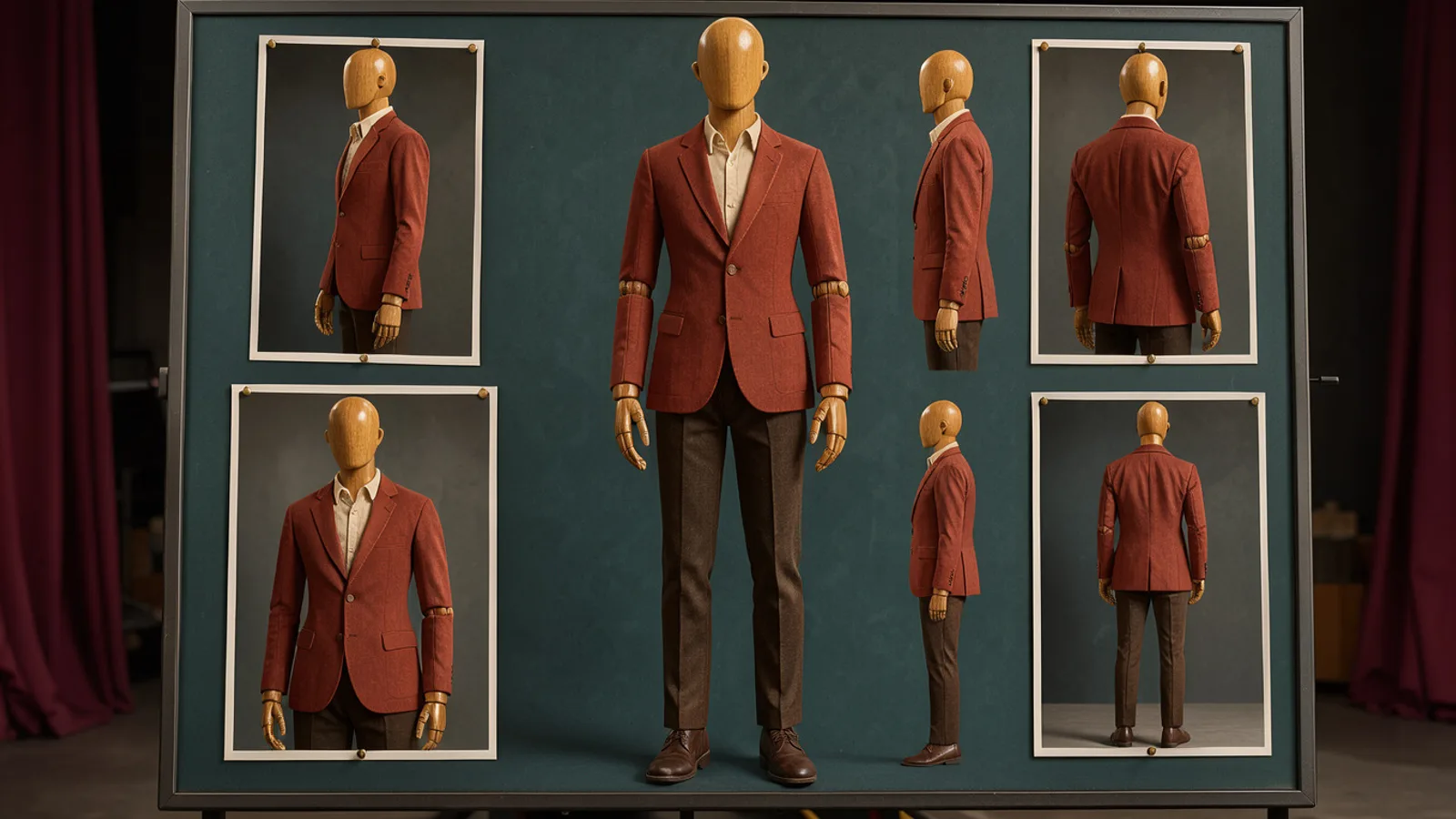
Luma Character Sheet is a feature from Luma AI that turns your reference images into one consistent character sheet. Luma announced it on November 4, 2026. You build the sheet once, then use it as the base for every new view of that character.
The announcement came from @LumaLabsAI, Luma's official account: "Once you've got the character right, the next view shouldn't turn them into someone else."
That one post is all Luma has said publicly so far. It has not posted a spec sheet, a docs page or a demo breakdown.
Why character consistency matters for ad creative
Character consistency matters because ads rarely use one image. A brand mascot, a model or a founder avatar has to look the same across hooks, static variants and different aspect ratios, or the campaign reads as several unrelated ads.
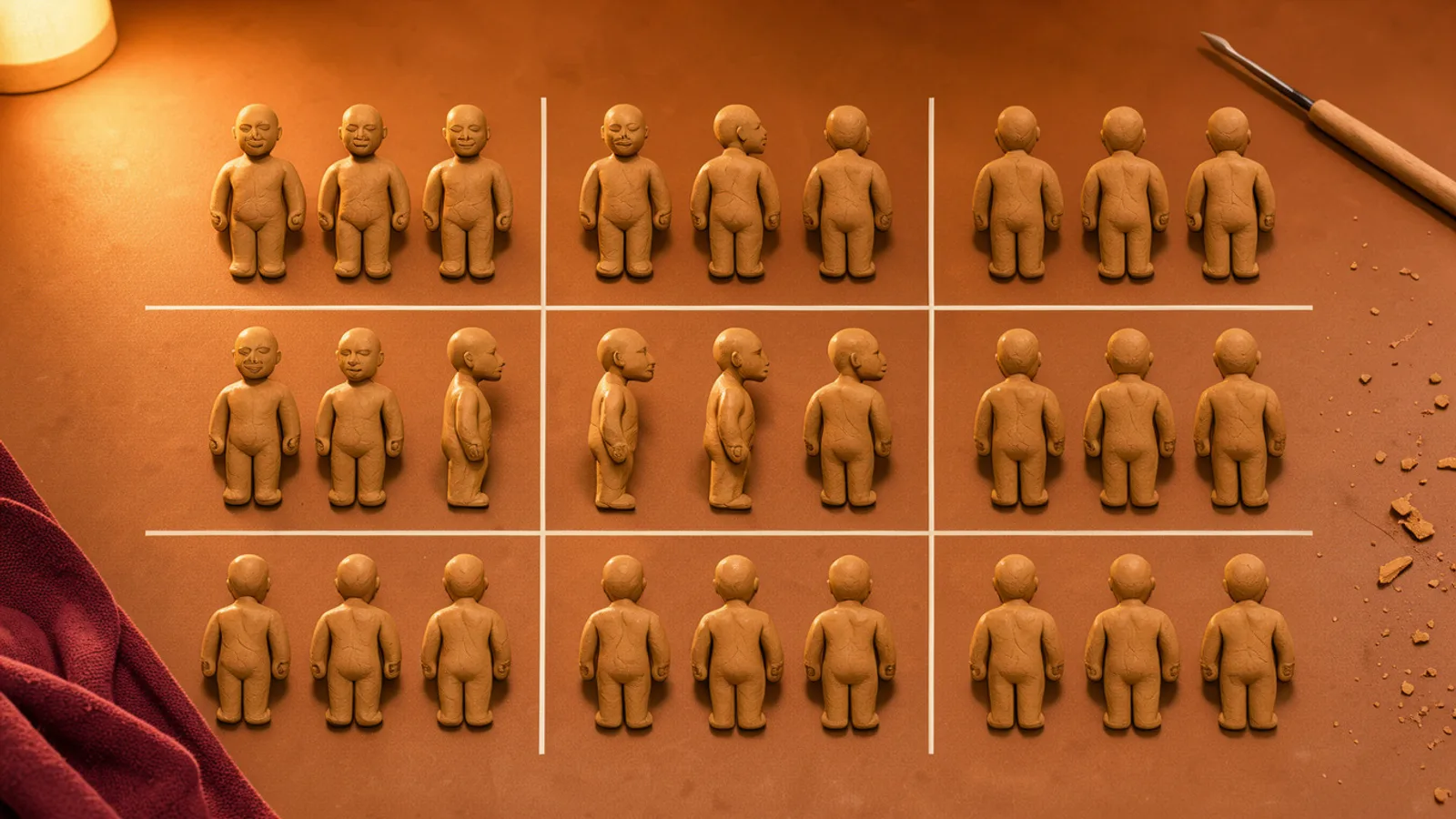 A grid of identical figurines shown from different angles on a desk
Drift is the usual failure. You approve one frame, ask for a side view or a new pose, and the face or outfit changes. A sheet that holds the approved look is meant to fix that.
Practical uses for performance teams:
- A recurring character across a batch of static ads.
- Reference frames for image-to-video, so the first frame matches the approved look.
- Mascot or avatar work that needs front, side and back views.
Whether Character Sheet outputs feed directly into Luma's video models is not stated. Luma's own materials describe Ray 3.2 with 4K output and an agent that keeps creative context across a project, but they do not connect that to this feature.
Luma Character Sheet key features and specs
Luma has confirmed one capability: it builds a single consistent sheet from your references, and you continue working from it. Everything else, including layout and limits, is not announced.
| Spec | Details |
|---|---|
| Maker | Luma AI |
| Announced | 2026-11-04 |
| Input | Your reference images |
| Output | One consistent character sheet |
| Number of references | Not announced |
| Resolution | Not announced |
| Views included | Not announced |
| API | Not announced |
| Pricing | Not announced |
A Facebook video snippet, undated beyond "1 day ago," is labeled a product demonstration for Seedance 2.0 in Luma. The snippet is truncated and does not say it shows Character Sheet, so treat any link between the two as unconfirmed.
Luma Character Sheet pricing and access
Luma has not published separate pricing for Character Sheet. It appears inside Luma, so access presumably follows your plan, but Luma has not said which plans include it or what it costs in credits.
 A key and stacked tokens on a dark table suggesting plan access and credits
For context, Layer3Labs (updated Oct 20, 2026) lists Luma plans at $30 per month for Plus (10,000 credits), $90 for Pro (40,000) and $300 for Ultra (150,000), with yearly billing at $25, $75 and $250 per month. The same review says Luma's pricing page no longer lists a standing free tier, and that credits run through a usage-capacity model built around Luma Agents, which makes output volume hard to predict.
Luma's own cost guide says Ray 3.2 Draft generations of five seconds cost 20 credits, about $0.012 per second at its assumed rate. That is a video figure, not a Character Sheet figure.
Luma Character Sheet vs other ways to keep characters consistent
Teams usually keep characters consistent by hand: reusing the same reference images in every prompt, or editing approved frames layer by layer. Character Sheet puts that step inside Luma. No benchmark compares it to other tools, and none of its outputs are shown in the available material.
Luma already pitches consistency through Layers, powered by Uni-1, which edits approved creative (swap a product, change a headline, localize) while keeping the layout. Character Sheet looks like the character-level counterpart. That is an inference from the product positioning, not something Luma has said.
How to use Character Sheet for AI video and static ads
Until Luma publishes details, the sensible approach is to test it on one real character before committing a campaign to it. Gather clean references, build the sheet, then request the views you need for ads.
A practical workflow:
- Collect 3 to 5 clear references of the character (the supported number is unknown).
- Build the sheet and check that face, outfit and proportions hold across views.
- Use the sheet as the base for static variants, then for first frames in video.
- Keep the approved sheet fixed while you change backgrounds, copy and formats.
If you compare image and video models side by side, the AdGraam AI Playground runs many models in one place. For chaining image and video steps into repeatable ad pipelines, see Flow Builder. For static output basics, the guide on making static ads with AI covers the fundamentals.
What to watch next
Watch for Luma's documentation, which should settle the open questions: number of references, views per sheet, resolution, credit cost and plan eligibility.
Also watch for three things:
- Whether Character Sheet outputs pass straight into Ray or other video models in Luma.
- Whether it is exposed through an API.
- Independent side-by-side tests showing how well identity holds across extreme angles and outfits.
Until then, the claim is Luma's own, and consistency is something to verify on your own references.
What people are posting
Once you've got the character right, the next view shouldn't turn them into someone else. Character Sheet in Luma turns your references into one consistent sheet you can keep working from. https://t.co/jtIijzKA7q
Key takeaways
- Luma AI announced Character Sheet on its official X account on 2026-11-04.
- Character Sheet turns your references into one consistent sheet you can keep working from, according to Luma.
- Luma has not published output resolution, sheet layout, or number of reference images allowed.
- No separate pricing for Character Sheet is announced; Luma's plans run $30 (Plus), $90 (Pro) and $300 (Ultra) per month, per a third-party review.
- Luma's pricing page no longer lists a standing free tier, according to Layer3Labs, updated Oct 20, 2026.
- API availability for Character Sheet is not announced.
Compare 200+ AI video and image models side by side
Run Kling, Veo, Sora, Seedance, Flux, Ideogram and Recraft in one Playground, or turn any product URL into ready-to-launch ads.
Frequently asked
What is Luma Character Sheet?
Character Sheet is a feature in Luma that turns your reference images into one consistent character sheet. Luma says you can keep working from that sheet so the next view does not turn the character into someone else.
When did Luma Character Sheet come out?
Luma AI announced it on its official X account on November 4, 2026. The post does not say whether the rollout is complete for all plans.
How much does Luma Character Sheet cost?
Luma has not published separate pricing for Character Sheet. Luma's general plans are $30, $90 and $300 per month for Plus, Pro and Ultra, according to Layer3Labs, and credit costs for this feature are unknown.
Is Luma Character Sheet free to try?
Not confirmed. Layer3Labs reports that Luma's pricing page no longer lists a permanent free tier, though new accounts may see limited trial credits.
Can I use Character Sheet for commercial ads?
Luma has not published license terms for Character Sheet outputs. Check Luma's terms for your plan before running outputs as paid ads.
Sources
More AI model news & creative guides

Pika H3 Flex Is Out: Features, Pricing and Access
Pika H3 Flex is a post-trained MiniMax H3 video model with open weights, 12 references, audio stems and 4K output. See specs, pricing and how to access it.

Topaz Wonder 4 Is Out: Features, Pricing and Access
Topaz Wonder 4 is live in Topaz for Web and Mobile. See the Mixture of Experts upscale, sharpen and denoise model, API pricing from $0.0428 and plan details.

Flux.3 Image Klein Is Out: Specs, Pricing and Access
Black Forest Labs released FLUX 3 Image Klein, a 5.6B open weights image editing model with 4K output, API pricing from $0.008 per image and local support.
AI UGC Ads: What They Are, What They Cost and How to Make One
AI UGC ads explained for D2C brands: how they compare with creator UGC on cost and speed, which formats work, the disclosure rules and how to make one.
Hook Rate and Hold Rate: Formulas and Benchmarks for Meta Ads
How to calculate hook rate and hold rate for Facebook and Instagram video ads, what good looks like, how to add them to Ads Manager and what to fix when they drop.
How to Make Static Ads With AI: A Guide for D2C Brands
How to make static ads with AI, step by step: the sizes Meta wants, eight formats worth testing, a brief template and the checks to run before you upload.
Your move
See your product as a winning ad
Turn a product URL into static ads and UGC-style videos, rebuild the competitor ads that already work, and read your Meta data to know what to make next.
AdGraam News DeskAI video and image news
The AdGraam News Desk tracks AI image and video model launches, leaks and rumors from labs, leakers and creators, and checks each claim against its sources. Unconfirmed stories say so, and each page is updated as its story develops.